











A survey by the Universidade Estadual Paulista - UNESP, carried out in partnership with Unaerp, described, for the first time worldwide, the multiresistant Klebsiella pneumoniae bacterium (popularly known as superbug), responsible for infections in Nile tilapia, one of the most consumed fish in Brazil and in the world. The scientific discovery was highlighted in a CAPES publication this Wednesday, January 18. (Check it out here in Portuguese.)
The work was carried out by doctoral student Daiane Vaneci da Silva at the Laboratory of Microbiology and Parasitology of Aquatic Organisms, at the Aquaculture Center of UNESP – Jaboticabal campus, under the guidance of Professor Fabiana Pilarski. The characterization and molecular epidemiology studies of the superbugs were carried out at the Laboratory of Bacteriology and Molecular Biology at Unaerp, coordinated by Professor André Pitondo da Silva. Professor Rafael Nakamura da Silva and doctoral student Mariana de Oliveira Silva, both from the Master's and Doctorate Program in Environmental Technology at the University, also participated in the study.
Pitondo-Silva points out that the discovery aroused concern among researchers, as the bacterium is not common in fish, being a species associated with several types of infections in humans, such as urinary and hospital infections, septicemia and pneumonia, with a high capacity for dissemination and resistance to antibiotics.
According to the researcher, the study is important for controlling the spread of bacterial pathogens transmitted in humans, animals, food and the environment. "Research of this type has been greatly encouraged by the World Health Organization and by research funding agencies, being linked to what is conventionally called One Health (single health), which covers human, animal and environmental health in controlling the spread of different pathogens," he points out.
Check out the full article, in English, about the scientific research published in Science Direct, by Elsevier Publisher, at https://doi.org/10.1016/j.aquaculture.2021.737376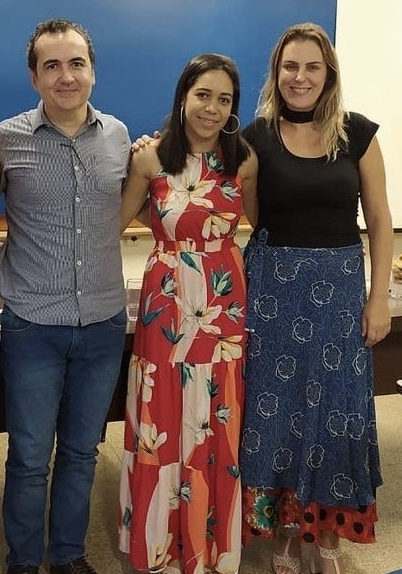
From left to right: Unaerp professor and researcher André Pitondo da Silva; UNESP doctoral student, Daiane Vaneci da Silva, and UNESP professor, Fabiana Pilarski.