









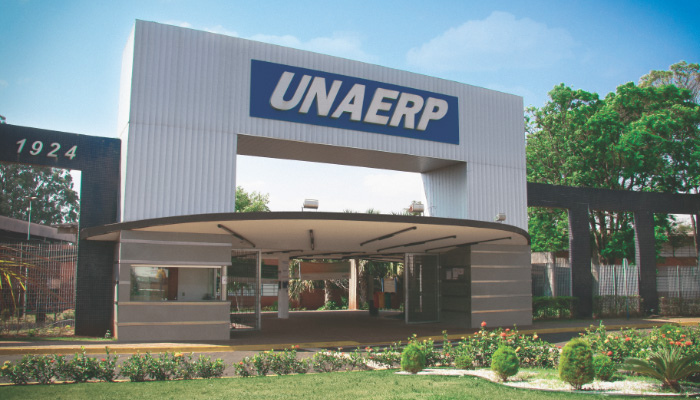


Biblioteca - consulta ao acervo
Unaerp - Bloco A
Telefone: (16) 3603-6774 / 3603-7010
E-mail: dpg@unaerp.br
Ribeirão Preto - SP
CEP - 14096-900
Research Outline
Sustainable Development
Sustainable development expresses the relationship between economic growth, environmental protection and social concern. Based on society’s awareness regarding the irresponsible use of natural resources and the environmental impacts caused by human action, the concept of sustainable development emerges as an alternative that promotes the interdependence between economy, environment, and society. Within this context, this line of research focuses on the fulfillment of the 17 Sustainable Development Goals (SDGs) set forward by the 2030 Agenda of the United Nations. The main aim of this research line is the study and application of technologies and tools that:- ensure healthy lives and promote well-being for all (SDG3);
- ensure availability and sustainable management of water and sanitation for all (SDG6);
- ensure access to affordable, reliable, sustainable and modern energy for all (SDG7);
- build resilient infrastructure, promote inclusive and sustainable industrialization and foster innovation (SDG9);
- make cities and human settlements inclusive, safe, resilient and sustainable (SDG11);
- ensure sustainable production and consumption patterns (SDG12);
- take urgent actions to combat climate change and its impacts (SDG13);
- promote conservation and the sustainable use of oceans, seas and marine resources for sustainable development (SDG14);
- protect, restore and promote the sustainable use of terrestrial ecosystems, sustainably manage forests, combat desertification, halt and reverse land degradation and halt biodiversity loss (SDG15).
Pollution Monitoring and Control
Pollution monitoring and control are tools embedded in the National Environmental Policy (PNMA) in an attempt to reconcile economic and social development with the preservation of environmental quality and ecological balance. Measures for use, control, preservation, recovery and planning are proposed and studied based on this monitoring and serve as a basis for improving public policies targeting the environment. On the other hand, pollution control requires the implementation of technologies and materials that must be continuously studied and optimized. Within this context, this line of research focuses on developing technical studies on the diagnosis and monitoring of water, air and soil quality based on specific indicators, as well as on developing and applying technologies to prevent and minimize pollution resulting from anthropogenic activities involving cities, industries and natural resources. The projects are:
- maintenance of indoor air quality and minimization of atmospheric emissions from fixed and mobile sources
- microbiological assessment of environments under the One Health approach, integrating human, animal and environmental health;
- optimization of water and wastewater treatment technologies;
- qualitative and quantitative assessment of water resources in watersheds;
- enabling the reuse of sanitary and industrial effluents;
- development and use of sustainable materials in environmental remediation processes, effluent treatment, and emission control;
- material and energy valorization of solid waste.