











Researchers from the Graduate Program in Biotechnology and Environmental Technology published the paper “Analysis of Multispectral Indices as a Tool for Segmenting and Quantifying the Alga Kappaphycus alvarezii in a Commercial Cultivation System” in the journal Biomass. The study was conducted by professors Mozart Marins, Lisandro Simão, Ellen Rodrigues, Edilson Carlos Caritá, and PhD candidates Marcel de Mello Innocentini and Juliano Kump Mathion.
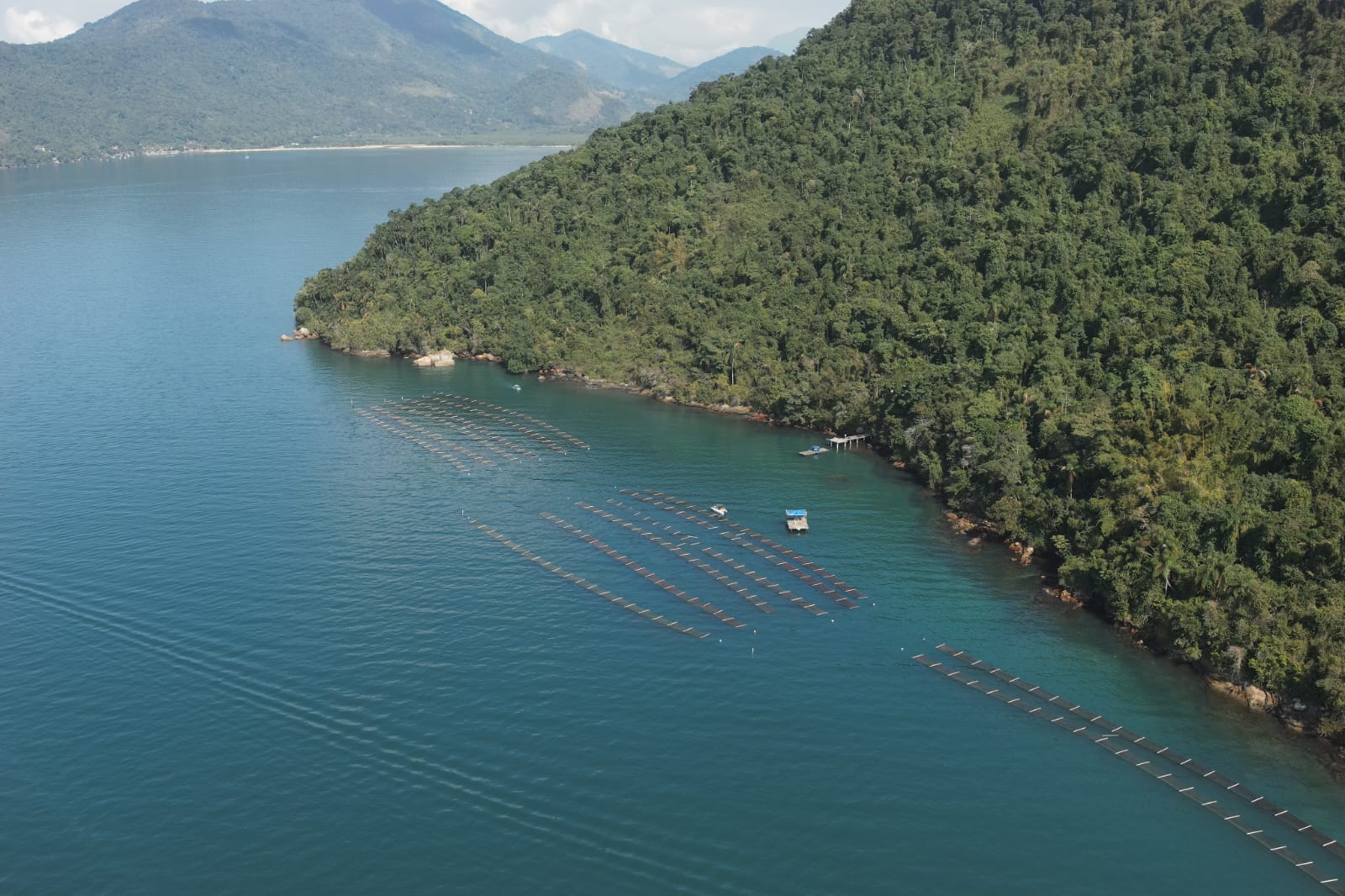
The study, carried out in partnership with the Biotechnology Unit, the Exact Sciences area of the University, and companies Algastech and Agropixel, evaluated multispectral indices obtained from drones to detect and quantify Kappaphycus alvarezii in commercial cultivations in Brazil. The analysis identified four indices—ABDI1, ABDI2, CIG, and GNDVI—as the most effective for image segmentation, aimed at improving cultivation management and productivity.
PhD candidate Marcel Innocentini points out that the research is essential for the sustainable growth of processes that represent automation and enhanced management. “The technology derived from the project is applicable to alga cultivations in other countries, thus representing the creation of Brazilian technology with direct applications in the global production chain and algiculture.”
PhD candidate Juliano Mathion states that the research was developed to assist in the country’s algiculture. “Our goal was to bring the technology of Agriculture 4.0 closer to precision agriculture, which has been used in Brazil for many years. Algae grow differently in different locations, but near the tubes, which are the floats, they grow better. There are different varieties that have varying branching patterns, colors, and absorption rates.”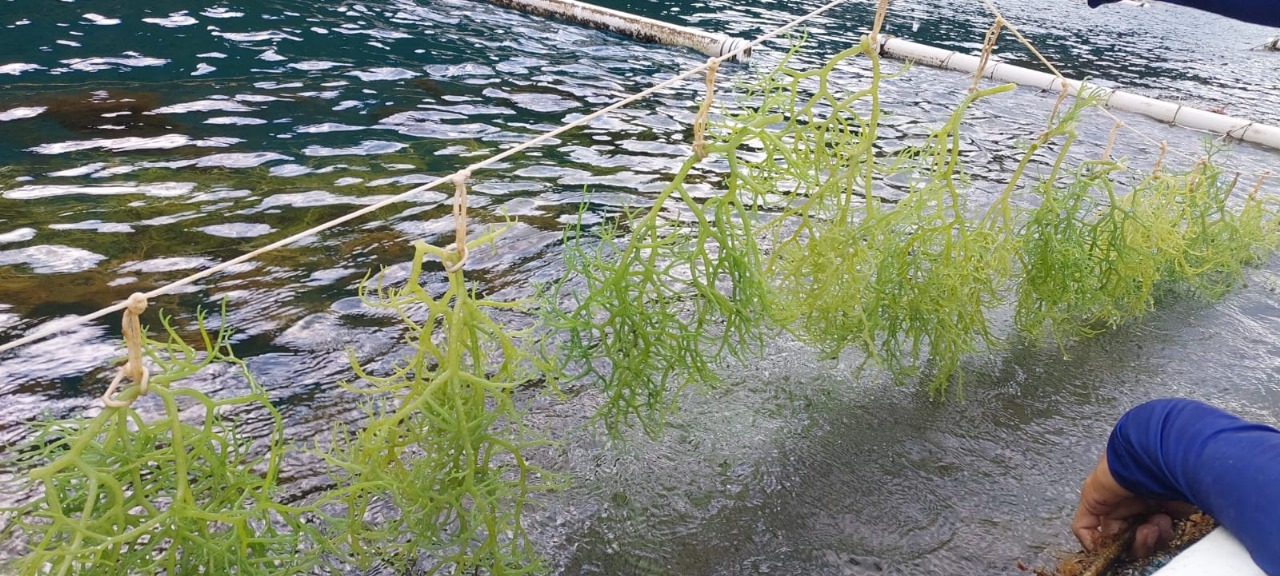
The research was developed to support the country’s algiculture
BIOMASS JOURNAL – The Biomass Journal (ISSN 2673-8783) is an international open-access journal that covers biomass treatment, valorization, conversion, and biorefining, publishing review articles, original research papers, and short communications.
For the coordinator of the Graduate Program in Biotechnology, Professor and researcher Mozart Marins, this publication highlights the importance of collaboration and the integration of various fields of knowledge for a common good. “We call this consilience, the knowledge united as one, contributing to generate benefits and strengthening the University and the different Graduate Programs.”